
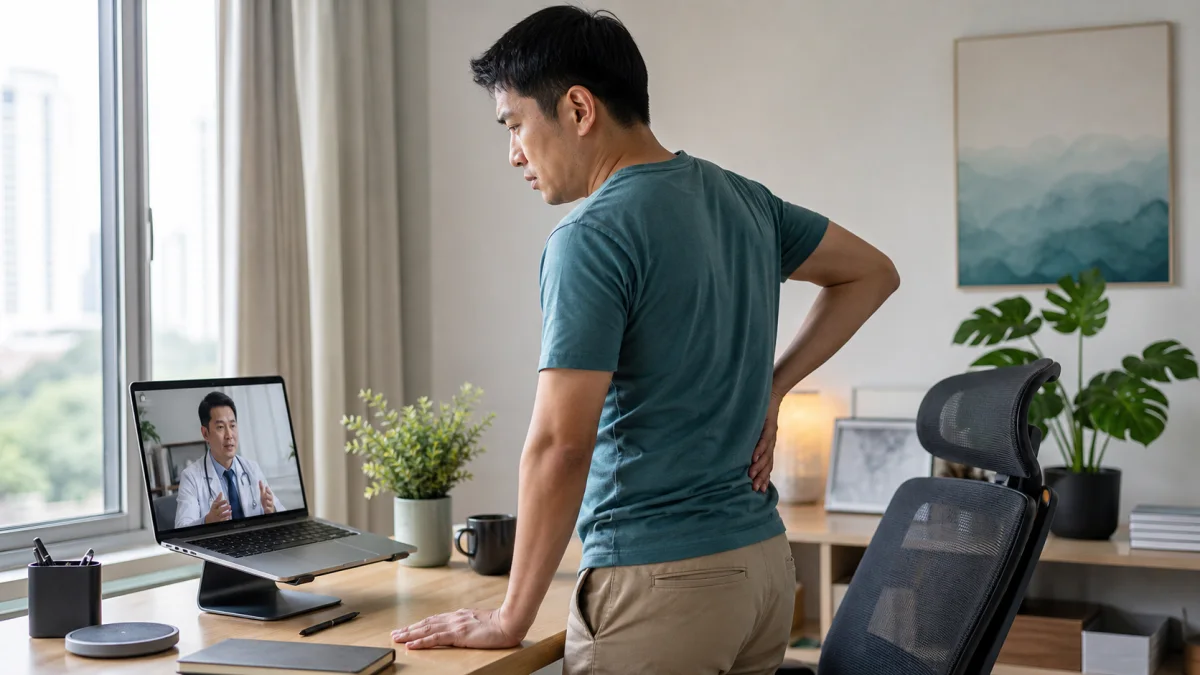
Telemedicine in Singapore can be a sensible first step for mild lower-back pain after lifting, prolonged desk work or a familiar muscle strain when you remain mobile and have no warning signs. An online doctor can review how the pain started, where it travels, what movements affect it and whether physical examination is needed.
Video has important limits. The doctor cannot press on the back, test reflexes directly, measure true muscle strength or arrange an immediate scan through the screen. Back pain with trauma, neurological symptoms or systemic illness should not be kept online for convenience.
When video assessment may be reasonable
Telemedicine may fit when:
- Pain is mild to moderate and began after an understandable strain or prolonged posture
- You can stand and walk safely
- There was no major fall, collision or direct injury
- There is no new leg weakness or significant numbness
- Bladder and bowel function are normal
- There is no fever, unexplained weight loss or serious general illness
- The pain is not rapidly worsening or focused over one severely tender point
The doctor may still recommend a clinic if this is a first unexplained episode, the movement view is unclear or examination could change treatment.
Prepare the story, not a self-diagnosis
Avoid deciding in advance that the problem is a “slipped disc” or “pinched nerve”. Instead, prepare details that help the doctor assess it:
- Exact time and activity at onset
- Location: centre, one side, upper or lower back
- Whether pain travels into the buttock or leg
- Tingling, numbness or weakness
- Walking difficulty or balance change
- Changes in urination, bowel control or sensation around the groin
- Fever, chills, night pain or unexplained weight loss
- Recent fall, sports injury, heavy lift or surgery
- Osteoporosis, cancer, immune suppression, kidney problems or steroid use
- Medicines already taken and any stomach, kidney, allergy or blood-thinning concerns
If pain started after an accident, say so at registration rather than waiting until the middle of the call.
What the doctor can observe on video
When safe, the doctor may ask you to:
- Stand and walk a few steps
- Point to the painful area
- Describe or demonstrate a movement that triggers pain
- Compare sensation between the legs
- Explain whether coughing or straining changes the pain
Do not perform a movement that feels unsafe or push through severe pain for the camera. Video observations are a screen, not a full neurological or musculoskeletal examination.
Gentle activity usually matters
SingHealth notes that many uncomplicated back strains improve with conservative care. Prolonged bed rest is generally not recommended unless a clinician specifically advises it. Walking and ordinary activity may continue within a tolerable range, while movements that clearly worsen pain should be modified.
Depending on individual advice, temporary heat or cold, workspace changes and gradual return to activity may help. Exercise plans should be personalised when symptoms radiate, recur or have not been properly assessed.
Medicine decisions need your full history
Over-the-counter pain products are not safe for everyone. Stomach ulcers, kidney disease, pregnancy, allergy, blood-thinning medicine and other prescriptions can change the options. Combination products may duplicate an ingredient.
Show the doctor every product and state the dose and time taken. A stronger medicine or MC is not guaranteed after teleconsultation; both depend on clinical assessment.
Use a clinic for persistent or unclear pain
In-person assessment is appropriate when:
- Pain is not improving after a few days of appropriate self-care
- Pain repeatedly wakes you or is progressively worsening
- It travels below the knee or comes with persistent tingling
- There is blood in the urine or abdominal pain
- Back pain is recurrent or chronic and needs physiotherapy planning
- A physical neurological examination, X-ray or MRI may be needed
Imaging is not automatically required for every strain. The clinician decides based on examination, duration and warning signs.
Back-pain red flags that should not wait online
SingHealth advises emergency assessment for back pain with loss of bladder or bowel control, new leg weakness or numbness, major injury, high fever or severe pain that is not responding to treatment. Numbness around the groin or rapidly progressive neurological symptoms are also urgent.
Call 995 for a medical emergency in Singapore. Patients with cancer, osteoporosis, recent surgery or immune suppression need a lower threshold for physical review.
An online redirect is appropriate when examination can protect nerve function or rule out serious causes. Compare settings with our teleconsult-or-clinic guide.
Sources reviewed
- SingHealth: Back pain and when to seek care
- SingHealth: Lower-back pain
- HealthHub: Using telemedicine the safe way
- MOH: Healthcare services regulation and licensing
- Singapore Civil Defence Force: Emergency medical services
Frequently asked questions
Can telemedicine in Singapore assess lower-back pain?
Mild pain after lifting, prolonged sitting or a familiar strain may suit an initial video assessment when you can move safely and have no trauma, fever, weakness, numbness or bladder and bowel symptoms.
What can an online doctor check for back pain?
The doctor can review the pain pattern and warning signs and may observe posture, walking and gentle movements on video. Touch, reflex testing, direct strength testing and imaging require in-person care.
Which back-pain symptoms are an emergency?
New loss of bladder or bowel control, numbness around the groin, progressive leg weakness, severe pain after major injury or serious systemic illness needs urgent assessment. Call 995 for a medical emergency.
For mild, uncomplicated back strain, join the OnlineDoctor.sg teleconsult queue.